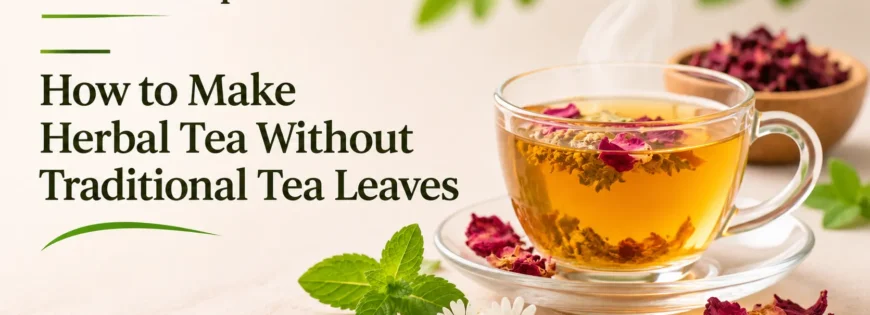
How to Make Herbal Tea Without Traditional Tea Leaves
You can make herbal tea without traditional tea leaves by steeping edible herbs, flowers, spices or fruit in hot water. Mint, ginger, rose petals and hibiscus are familiar starting points, and you can use them individually or combine them for a more layered flavour. All you need is drinking water, suitable food-grade ingredients and a way to strain your cup.
Unlike black or green tea, these drinks do not need leaves from the tea plant. This guide explains how to choose herbal tea ingredients, prepare a balanced infusion and store your botanicals safely.
What Is Herbal Tea?
Herbal tea is a drink made by infusing plant ingredients other than leaves from Camellia sinensis, the plant used to make traditional teas. Depending on the recipe, it may contain leaves, flowers, roots, seeds, spices or dried fruit. The result can be floral and delicate, fresh and minty, or warming and spicy.
A tisane is another name for an infusion made without traditional tea leaves. The term herbal infusion describes both the drink and the process of soaking botanical ingredients in water. In everyday conversation, however, most people simply call it herbal tea.
Herbal tea versus black and green tea
| Feature | Herbal tea or tisane | Black or green tea |
|---|---|---|
| Main ingredients | Herbs, flowers, spices, roots or fruit | Leaves of the Camellia sinensis plant |
| Caffeine | Often naturally caffeine-free, depending on ingredients | Naturally contains caffeine |
| Flavour | Varies widely, from floral to spicy | Varies by type and processing |
| Preparation | Usually steeped; some roots and spices may be simmered | Usually steeped, with water temperature depending on the tea |
A blend labelled “herbal” can still contain black tea, green tea, yerba mate or other ingredients that contribute caffeine. If you want a caffeine-free herbal tea, read the complete ingredient list rather than relying on the product name.
Herbal Tea Ingredients to Try
The best ingredients depend on the taste you enjoy. Start with a single ingredient so you can recognise its flavour, then experiment with small combinations. Use ingredients intended for food or beverage use, and check their identity before adding them to your cup.
Leaves and flowers
- Mint: Fresh or dried mint makes a cooling, aromatic infusion. It can be enjoyed on its own or paired with a little ginger.
- Rose petals: Food-grade dried rose petals add a gentle floral aroma. Their flavour varies by variety and can be subtle, so avoid adding strong spices that overwhelm them.
- Hibiscus: Dried hibiscus calyces—the fleshy parts around the flower—produce a deep red infusion with a tart taste. Look for hibiscus sold specifically for culinary use.
- Chamomile: Culinary chamomile makes a mild infusion with a floral, slightly apple-like aroma. People with allergies to plants in the daisy family should be cautious.
For more on selecting flowers for a cup, see [Suggested internal link: Guide to Edible Dried Flowers]. Decorative flowers are not automatically edible and may have been treated with substances unsuitable for consumption.
Roots, spices and fruit
- Fresh ginger: Thin slices give water a warming, peppery flavour. Use fewer slices for a milder cup or simmer briefly for a stronger drink.
- Fennel seeds: These have a sweet, liquorice-like flavour familiar in many Pakistani households. Lightly crushing them before steeping helps release their aroma.
- Cinnamon: A small piece of food-grade cinnamon stick can add warmth and sweetness to a blend. Use it sparingly, particularly when trying a new combination.
- Lemon peel or slices: Lemon adds a bright flavour, although it can make an already tart hibiscus infusion sharper. Wash the fruit well and use peel intended for consumption.
Fresh and dried ingredients have different strengths, so measurements are starting points rather than fixed rules. Keep unfamiliar combinations simple and adjust one ingredient at a time. This makes it easier to find a flavour you enjoy and identify anything that does not suit you.
How to Make Herbal Tea: A Simple Method
For one cup, begin with approximately 250 ml of drinking water and one of the following ingredient options:
- 1–2 teaspoons of a single dried culinary herb or flower, such as mint or rose petals
- A small handful of clean, fresh mint leaves
- 2–3 thin slices of fresh ginger
- About 1 teaspoon of dried culinary hibiscus for a tart infusion
These quantities are intended for a homemade cup, not as instructions for every packaged blend. Dried ingredients vary in size and intensity, so follow the label when one is provided. A covered mug, small teapot or heat-safe jug works well for steeping.
Step-by-step brewing instructions
- Prepare the ingredients. Check dried botanicals for signs of moisture, mould or an unusual smell. Rinse fresh leaves or ginger under clean running water, and slice or lightly bruise them if needed.
- Heat the water. Bring fresh drinking water to a boil. For delicate flowers or leaves, let it cool briefly before pouring; freshly boiled water can also be used for many culinary herbs.
- Add the botanicals. Place your chosen ingredients in a cup, infuser or small teapot. Pour the hot water over them.
- Cover and steep. Cover the vessel to retain aroma. Start with 5–10 minutes for most leaves and flowers, tasting near the end to see whether you prefer a longer infusion.
- Strain and serve. Remove the ingredients with a strainer or take out the infuser. Drink warm, or allow the tea to cool before refrigerating it for an iced drink.
For a stronger flavour, use a little more ingredient or increase the steeping time gradually. Some flowers and herbs can become bitter or overly sharp if left too long. If the cup tastes too strong, dilute it with hot water rather than adding sugar immediately.
When to simmer instead of steep
Firm ingredients such as sliced ginger, fennel seeds and cinnamon stick can benefit from a short simmer. Add them to water in a small saucepan and simmer gently for about 5–10 minutes before straining. If combining them with delicate rose petals or mint, turn off the heat and add those ingredients for the final steep rather than simmering everything together.
Easy Herbal Infusion Combinations
These simple ideas are starting points for home preparation, not descriptions of Seven Trees product formulations. Use food-grade ingredients and adjust quantities to suit your taste. Each combination can be prepared in a mug or scaled up for a teapot.
Mint and ginger
Steep a small handful of fresh mint leaves with two thin slices of ginger in a cup of hot water for 5–10 minutes. The mint gives the infusion a fresh aroma, while ginger adds gentle warmth. For a more pronounced ginger flavour, simmer the ginger first, then turn off the heat and steep the mint in the same water.
Rose and fennel
Lightly crush about half a teaspoon of fennel seeds and steep them with one teaspoon of food-grade dried rose petals. Cover for around 7–10 minutes, then strain and taste. The fennel contributes sweetness, while the rose provides a floral note that is best appreciated without too many competing ingredients.
If you are interested in floral infusions, see [Suggested internal link: How to Make Rose Tea] for more preparation ideas. Always choose petals sold for culinary use rather than decorative potpourri or florist flowers.
Hibiscus and lemon
Steep about one teaspoon of dried culinary hibiscus in a cup of hot water for 5–10 minutes, then strain. Add a small slice or squeeze of lemon only after tasting, as hibiscus is already tart. For an iced version, cool the strained tea, refrigerate promptly and serve over ice.
Hibiscus can stain light-coloured fabric and porous surfaces, so handle it carefully while brewing. A covered jug is useful if you are preparing several servings. You can also explore [Suggested internal link: Hibiscus Tea Preparation Guide] for more ways to serve it.
How to Choose and Store Botanical Ingredients
Quality matters whether you are buying a single herb or a ready-made blend. A clear ingredient list helps you check for tea leaves, added flavourings and anything you need to avoid. For dried flowers, look for products identified as suitable for consumption, with intact packaging and no visible dampness.
When comparing herbal tea ingredients, consider the following:
- Identity: Choose ingredients with clear names from a reliable source. Do not use an unidentified plant or assume every variety of a familiar flower is edible.
- Intended use: Buy culinary-grade flowers and herbs, not ingredients sold only for decoration, fragrance or crafts.
- Packaging and freshness: Check the best-before date where provided, and avoid packs with damaged seals, visible mould or an unusual odour.
- Ingredient transparency: Review the full list if you want to avoid caffeine, an allergen or a particular flavouring.
- Storage instructions: Follow the supplier’s directions, especially if the blend contains ingredients with different storage needs.
Keep dried herbs, flowers and spices in clean, airtight containers away from heat, direct sunlight and moisture. Use a dry spoon rather than reaching into a container with wet hands. Freshness and flavour decline over time, so buy quantities you can reasonably use and follow any date on the package.
Fresh mint and other fresh produce should be stored separately from dried ingredients. Refrigerate prepared tea promptly if you are not drinking it soon, and use a clean, covered container. If a stored infusion develops an unusual smell, appearance or signs of spoilage, discard it.
Safety and Caffeine Considerations
Many single-ingredient herbal infusions, including plain mint, ginger, rose and culinary hibiscus, are naturally caffeine-free. That does not mean every botanical drink is caffeine-free: a blend may include traditional tea, yerba mate or another caffeine-containing ingredient. Check the label if avoiding caffeine matters to you.
Natural ingredients are not automatically suitable for everyone. Allergies, reflux, medical conditions and medicines can affect whether a particular herb is appropriate; for example, peppermint may aggravate reflux in some people. If you are pregnant or breastfeeding, take medication, have a medical condition or are preparing an herbal drink for a child, ask a qualified healthcare professional about the specific ingredients.
Keep serving sizes sensible, especially when trying an unfamiliar botanical. Herbal tea is a beverage, not a replacement for prescribed treatment, and traditional uses should not be taken as proof that a tea treats a health condition. If an ingredient causes a reaction or discomfort, stop using it and seek medical advice when needed.
Frequently Asked Questions
Can I make herbal tea with just one ingredient?
Yes. Mint, ginger, fennel or food-grade rose petals can each make an enjoyable single-ingredient infusion. Starting with one ingredient also helps you learn its flavour before creating a blend. Adjust the amount and steeping time gradually rather than making the first cup very strong.
Is every herbal tea naturally caffeine-free?
No. A tisane made only from caffeine-free herbs, flowers or spices can be naturally caffeine-free, but some blends also contain black tea, green tea or yerba mate. Check the complete ingredient list rather than relying on the word “herbal.” If caffeine content is unclear, ask the seller before purchasing.
Can I use fresh herbs instead of dried herbs?
Yes, provided the herbs are correctly identified, clean and suitable for food use. Fresh herbs contain more water than dried herbs, so you will often need a larger amount for a similar flavour. Rinse them under clean running water, and begin with a small handful per cup. Taste and adjust as needed.
Can I use rose petals from a garden or flower shop?
Do not assume those petals are suitable for tea. Flowers sold for decoration may have been treated with substances not intended for consumption, and garden flowers can be exposed to sprays or other contaminants. Choose correctly identified rose petals sold for culinary use from a reliable source. Avoid any petals with mould, moisture damage or an unusual smell.
How long should an herbal tea steep?
A starting range of 5–10 minutes works for many leaves and flowers, although the best time depends on the ingredient and your taste. Ginger and other firm ingredients may give more flavour when gently simmered. Taste before adding sweetener, and shorten the next steep if the result is too strong. Follow package instructions for a purchased blend.
Can I drink the same herbal tea every day?
That depends on the ingredients, the amount and your individual circumstances. A familiar culinary infusion may fit into an everyday routine for some adults, but concentrated or unfamiliar blends deserve more care. Check for ingredients that interact with medicines or worsen a condition you have. A qualified healthcare professional can advise you if you are unsure about regular use.
Enjoying Herbal Tea in Pakistan
Making herbal tea without traditional tea leaves can be as simple as steeping mint, ginger or food-grade dried flowers in hot water. Start with a small amount, cover the cup while it steeps and adjust the flavour after tasting. Choosing identifiable culinary ingredients and storing them away from moisture are just as important as the brewing method.
For readers exploring herbal tea in Pakistan, Seven Trees is a Pakistani natural wellness brand with a focus that includes teas, botanical ingredients and dried flowers. Visit SevenTrees.pk to explore relevant natural wellness products, and check individual listings for current availability and ingredient details. You can also look for [Suggested internal link: Herbal Tea Category] and [Suggested internal link: Dried Flowers and Botanical Ingredients] as you plan your next infusion.