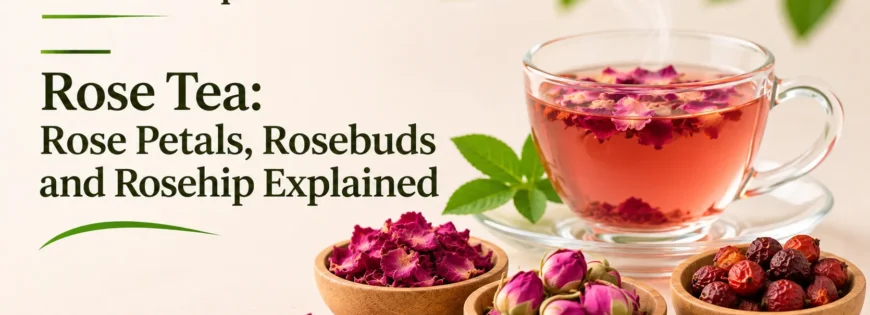
Rose Tea: Rose Petals, Rosebuds and Rosehip Explained
Rose tea can refer to an infusion made from rose petals, unopened rosebuds or rosehips, the fruit that develops after a rose blooms. These ingredients come from rose plants, but they produce noticeably different drinks. Petals and buds tend to be fragrant and floral, while rosehips generally taste fruitier and more tart.
Understanding which part of the plant you are buying helps you choose the flavour, brewing method and ingredients that suit you. This guide explains the differences, how to prepare each type and what to check when purchasing dried rose flowers in Pakistan.
What Is Rose Tea?
Rose tea is a beverage made by steeping edible rose ingredients in water. When it contains only rose petals, buds or rosehips, it is more precisely an herbal infusion rather than tea made from the Camellia sinensis plant. Some packaged rose teas, however, combine rose ingredients with black or green tea.
The name on the front of a packet does not always tell you which part of the plant is inside. A floral rose petal tea and a tangy rosehip tea may both be described simply as “rose tea.” Check the ingredient list to understand what you are buying, especially if you have a particular flavour or caffeine preference.
Rose has a familiar place in Pakistani food and drink culture, where its floral aroma is used in sweet dishes and beverages. Rose tea offers another way to enjoy that character, although an unsweetened infusion may taste much subtler than rose-flavoured syrups or desserts.
Rose Petals, Rosebuds and Rosehips: What Is the Difference?
The most important difference is the part of the rose plant used. Petals and buds come from the flower, while rosehips are the fruit that can form after flowering. Their appearance and preparation also differ.
| Ingredient | Plant part | Typical flavour | Appearance in a cup |
|---|---|---|---|
| Rose petals | Individual flower petals | Delicate, floral and sometimes lightly sweet | Often pale, with colour varying by rose |
| Rosebuds | Unopened flower buds | Floral and aromatic; sometimes slightly more herbal | Usually pale to golden |
| Rosehips | Fruit of the rose plant | Fruity, tangy and mildly tart | Often golden, orange or reddish, depending on the ingredient and blend |
These descriptions are starting points rather than guarantees. Rose variety, drying, freshness, quantity and steeping time all influence the finished drink.
Rose petal tea
Rose petal tea is made by steeping loose, food-grade rose petals. The petals may be used on their own or added to a herbal tea blend for aroma and a gentle floral note. Their scent can be more noticeable than their flavour, so a fragrant dry ingredient does not necessarily produce a strongly flavoured cup.
Dried petals are easy to measure and strain, making them a straightforward choice for someone trying floral tea for the first time. They can also be mixed with other suitable edible botanicals. For a closer look at the flavour, see what rose petal tea tastes like.
Rosebuds tea
Rosebuds tea uses whole or mostly whole unopened buds. Depending on how they are prepared, the buds may include small green parts at their base as well as the petals inside. They look attractive in a clear teapot and can offer a subtly floral, sometimes slightly grassy infusion.
Because buds vary in size and density, counting them is not always as consistent as measuring loose petals. Start with a modest amount and adjust the next cup to taste. Give the buds enough room in the pot or infuser for water to circulate around them.
Rosehip tea
Rosehip tea is made from the fruit of the rose plant, usually dried and cut or crushed for brewing. Unlike petals and buds, rosehips are commonly chosen for their fruit-like tartness rather than a pronounced rose-flower aroma. They are also used in blends with ingredients such as hibiscus.
Rosehips and hibiscus are different botanicals, even though both can contribute a tangy flavour. A red drink labelled “rosehip” may contain other ingredients, so read the full list if you want a single-ingredient infusion. Our guide to rosehip tea versus rose petal tea explains the distinction in more detail.
How to Make Rose Tea at Home
The best starting method depends on the ingredient. Petals and buds are relatively delicate, while dried rosehips are firmer and often benefit from a longer steep. Use clean equipment, drinking water and ingredients clearly intended for consumption.
Brewing rose petal tea
For one cup, begin with approximately one to two teaspoons of loose dried petals and about 250 ml of water. Petal size and how loosely they fit in the spoon can vary, so treat this as a flexible starting point. Follow the package directions if they differ.
- Bring the water to a boil, then let it cool briefly.
- Place the dried rose petals in a cup, teapot or infuser.
- Pour the hot water over the petals and cover the cup or pot.
- Steep for about 5–7 minutes, then strain and taste.
- Add a little honey or another sweetener if desired.
For a stronger floral taste, try slightly more petals in the next cup. A much longer steep can bring out flavours you may find less pleasant, so change one factor at a time. The resulting colour may be quite light even when the tea has a noticeable aroma.
Brewing dried rosebuds
Start with roughly three to five small food-grade rosebuds per 250 ml cup. Larger buds may need a different quantity, and some products include loose petals as well. Check the label and adjust according to the size and freshness of your ingredients.
- Place the buds in a teapot or roomy infuser.
- Add freshly boiled water that has cooled briefly.
- Cover and steep for about 7–10 minutes.
- Strain, taste and adjust the quantity or steeping time for your next cup.
A clear pot makes it easy to watch the buds open, but any clean, heat-safe vessel will work. Avoid pressing the buds heavily when straining if you prefer a gentler cup. You can also combine a few buds with loose petals for a more layered floral infusion.
Brewing rosehips
For cut dried rosehips, begin with approximately one to two teaspoons per 250 ml cup, unless the package recommends otherwise. Add freshly boiled water, cover and steep for around 10–15 minutes before straining. Some products may suggest simmering instead, particularly if the pieces are large.
Use a fine strainer, especially with loose cut or crushed rosehips, to catch small particles and irritating hairs. Ready-to-brew products should be prepared as directed on their labels. If you are unsure whether a product has been processed for tea, ask the seller before using it.
Flavour, Serving Ideas and Everyday Use
Rose petals and buds are useful when you want a light, aromatic drink that does not need milk. Serve the infusion warm and plain first to understand its natural flavour. If you prefer sweetness, add a small amount after straining so you can adjust it gradually.
For a cooler drink, brew the tea hot, strain it and let it cool before refrigerating. Serve it chilled or over ice, and keep the prepared drink refrigerated rather than leaving it at room temperature for long periods. Make small batches and use them promptly for the best flavour.
Rose also pairs well with other food-grade ingredients, though each one changes the character of the cup:
- Hibiscus: Adds a tart, fruity contrast to floral rose petals.
- Mint: Brings a fresh taste that can make a light infusion feel more pronounced.
- Green or black tea: Adds the flavour and caffeine of true tea; use the tea’s recommended brewing method.
- Rosehips: Contribute fruitiness and tartness to a blend containing petals or buds.
Start with a small amount of each ingredient so that one flavour does not overpower the others. If you use a pre-mixed product, check the label rather than assuming it contains only rose. This is particularly important for anyone avoiding caffeine or an ingredient to which they are sensitive.
Choosing and Storing Dried Rose Flowers in Pakistan
When shopping for dried flowers in Pakistan, choose products explicitly sold for food or beverage use. Decorative petals, potpourri, wedding flowers and florist bouquets are not appropriate substitutes: they may have been treated, perfumed, dyed or handled in ways that make them unsuitable for consumption. Being a natural flower does not, by itself, establish that a product is food-grade.
Check the ingredient list for the specific rose part and any added flavourings or other botanicals. The package should also be intact, with useful storage instructions and a date or batch information where provided. If details are unclear, ask the seller how the flowers are intended to be used.
Colour alone is not a reliable test of quality. Naturally dried petals can vary in shade, and some fading can occur over time. Instead, look for a clean product without visible moisture, mould, insects or an unusual musty smell; do not use it if you notice signs of contamination.
An “organic” claim is different from a general “natural” description. If organic production matters to you, look for a clear certification claim and supporting details rather than assuming that dried or natural means certified organic. Learn more about the difference between food-grade and decorative rose petals before choosing flowers for tea.
How to store rose petals, buds and rosehips
Keep dried ingredients in a clean, dry, airtight container away from direct sunlight, heat, moisture and strong kitchen odours. In humid weather, close the container promptly after each use and avoid handling the contents with a wet spoon. A cupboard away from the stove is often a practical storage place.
Follow any storage and best-before guidance on the package. Aroma may gradually fade even when an ingredient remains dry, so purchase a quantity you can reasonably use. Discard the contents if they become damp, develop mould or smell off.
Safety and Wellness Considerations
Rose infusions can be enjoyed for their flavour and aroma, but they should not be treated as medicine. Rosehips contain naturally occurring compounds, including vitamin C, although the amount varies and processing, storage and brewing affect what reaches the cup. A serving of tea should not be assumed to provide a particular nutrient dose or health benefit.
Pure rose petals, buds and rosehips are naturally caffeine-free. That changes if they are blended with black tea, green tea or another caffeinated ingredient. Always check the complete ingredient list if you are sensitive to caffeine.
People can be sensitive or allergic to plant ingredients. If you have a known rose allergy, avoid rose tea; if you experience a reaction after drinking it, stop using it and seek medical advice as appropriate. Those who are pregnant or breastfeeding, have a medical condition, take medication or are considering herbal drinks for children should ask a qualified healthcare professional about suitability, particularly for concentrated products or blends.
Frequently Asked Questions
Are rose petals and rosehips the same thing?
No. Rose petals are part of the flower, while rosehips are the fruit that can develop after flowering. Petals are generally floral, whereas rosehips tend to be fruitier and more tart.
Does rose tea contain caffeine?
A drink made only from rose petals, rosebuds or rosehips is naturally caffeine-free. A rose blend containing black or green tea will contain caffeine from the tea leaves. Check the ingredient list if you are choosing a drink for the evening.
Can I make tea from roses in my garden?
Only use roses if you can confidently identify them as suitable for consumption and know they have not been exposed to unsuitable pesticides or other contaminants. Garden sprays, roadside pollution and uncertain handling can make flowers unsuitable for tea. If you cannot verify their history, choose a product clearly sold for food or beverage use instead.
Why is my rose petal tea not pink?
Rose petals do not always release a strong pink colour into water. The shade depends on the rose variety, drying process, quantity and other ingredients in the cup. A pale infusion can still have a pleasant floral aroma.
Can I drink rose tea every day?
A simple rose infusion may fit into some adults’ everyday beverage routines, but it is not automatically suitable for everyone. Ingredient strength and individual sensitivities vary, and blends can contain additional herbs or caffeine. If you have a health condition, take medication or have concerns about regular use, check with a healthcare professional.
Can I combine rosehips with rose petals?
Yes, provided both ingredients are food-grade and suitable for you. The rosehips add tartness, while the petals contribute a floral note. Because rosehips often need longer to steep, you can start them first and add petals for the final few minutes.
Choosing the Right Rose Tea for You
Choose rose petals or rosebuds if you want a gentle floral aroma, and try rosehips if you prefer a fruitier, tangier cup. Use ingredients intended for consumption, follow the package directions and adjust the amount and steeping time to suit your taste. Proper storage helps protect the aroma and keeps dried botanicals away from moisture.
For more ideas, explore the rose tea articles and dried rose petal guides from Seven Trees. As a Pakistani natural wellness brand, Seven Trees brings together information about teas, dried flowers and botanical ingredients for people exploring natural products. Visit SevenTrees.pk to discover its current range and check individual product details and availability.