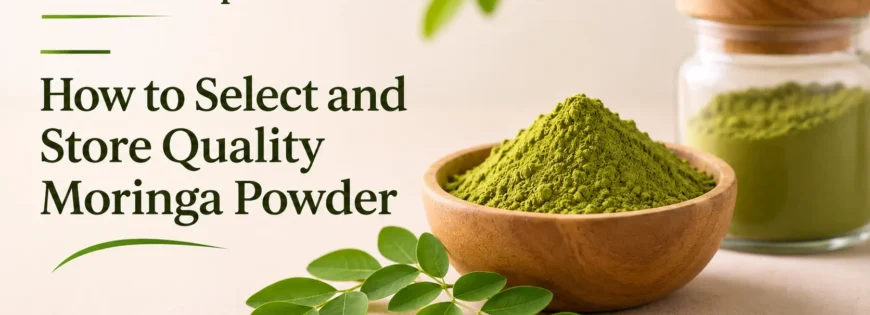
How to Select and Store Quality Moringa Powder
Good moringa powder should come from a clearly identified, food-grade source and be packaged to protect it from moisture, heat, and light. When comparing products, check the ingredient list, dates, packaging, and any available quality information rather than relying on colour alone. Once opened, keep the powder tightly sealed in a cool, dry cupboard and use a clean, dry spoon.
For shoppers in Pakistan, these details are especially useful during hot weather and humid monsoon months. This guide explains how to assess moringa powder quality, what different colours may indicate, and how to keep your purchase in good condition at home.
What Is Moringa Powder?
Moringa powder is commonly made by drying and grinding the leaves of the moringa tree, usually Moringa oleifera. The resulting powder has an earthy, leafy flavour that can be noticeable in drinks and food. Its appearance and texture can vary according to how the leaves were dried, processed, and ground.
Moringa leaves are used in cooking in several parts of the world, while the powder offers a convenient way to add the dried leaves to a meal. It contains naturally occurring nutrients, but the amounts vary with the product and serving size. It is best considered a food ingredient rather than a substitute for a balanced diet or medical treatment.
Not every product labelled “moringa” is necessarily a plain leaf powder. Some may contain other plant parts or additional ingredients, so the label matters. If you are comparing forms, our guide to moringa leaves versus moringa powder explains how they differ.
How to Check Moringa Powder Quality Before Buying
The most useful quality checks begin with the information on the pack and the seller’s willingness to answer questions. A green appearance or a natural-sounding description cannot establish whether a powder is clean, correctly identified, or suitable for consumption. Look at the whole product, including its ingredient list, packaging, dates, and traceability.
Read the ingredient list and plant identification
If you want plain moringa leaf powder, look for a label that clearly identifies moringa leaves as the ingredient. The botanical name Moringa oleifera can provide additional clarity, particularly when a seller offers several botanical powders. Check whether the product contains only leaf powder or is a blend with other ingredients.
A longer ingredient list is not automatically a sign of poor quality, but it should match what you intend to buy. For example, a flavoured drink mix is different from a single-ingredient powder. Avoid products with unclear plant-part information or labels that make claims without explaining what is inside.
Check dates, batch details, and packaging
Look for a best-before or use-by date and follow any storage instructions on the label. A manufacturing or packing date can also help you understand how long the product has been on the shelf, although it does not tell you when the leaves were harvested. A batch or lot number is useful if you need to contact the seller about a specific pack.
Choose intact, well-sealed packaging that is appropriate for food. An opaque or light-protective pouch or container can help limit exposure to light, while a reliable closure is useful after opening. If a pack arrives torn, damp, open, or with a damaged seal, contact the seller rather than using it.
Ask about testing and sourcing
A reputable seller should be able to explain where the product comes from and how it is intended to be used. If testing is important to you, ask whether batch-specific results are available for relevant concerns such as microbial contamination and heavy metals. A useful report should identify the product and batch, the tests performed, the results, and the laboratory.
Testing information is more informative than a general statement that a product is “pure” or “premium.” It still needs to be interpreted alongside the supplier’s handling practices and the condition of the pack. If a seller cannot answer basic questions about ingredients, intended use, or packaging, consider another option.
Understand “natural” and “organic” claims
“Natural” is a broad marketing term and does not, by itself, establish how moringa was grown or processed. Similarly, a product described as organic should not be assumed to be independently certified without supporting information. If certification matters to you, look for the certifying body and relevant certification details, or ask the seller for verification.
Organic status and food safety are separate considerations. An organic label does not guarantee that a powder is free from contamination, and a product without an organic claim is not automatically unsafe. Assess the ingredient information, packaging, and available quality documentation in either case.
What Does Moringa Powder Colour Tell You?
Moringa powder colour can offer a clue about the dried leaves, but it is not a reliable test of safety or nutritional quality. Leaf powders are often green, ranging from brighter green to olive or muted green. Differences can result from the leaves themselves and from drying, processing, age, and storage conditions.
A very brown, unusually dull, or significantly discoloured powder may be worth questioning, particularly if it also smells stale or the packaging has been exposed to heat or moisture. However, colour alone cannot tell you whether a powder has harmful microbes, heavy metals, or the nutrient levels claimed on a label. Artificial colouring is also possible, which is another reason to check the ingredient list rather than judging by appearance alone.
| Check | What to look for | Important limitation |
|---|---|---|
| Colour | A reasonably consistent green or olive-green appearance | Bright green does not prove freshness, purity, or safety |
| Aroma | A mild, leafy or earthy smell | Harmful contamination may have no detectable smell |
| Texture | A dry powder without signs of dampness | Fine grinding does not prove better quality |
| Packaging | An intact seal and a suitable best-before or use-by date | Good packaging cannot correct poor processing |
Use these observations together rather than treating any one as a pass-or-fail test. If the powder has an unusual chemical, rancid, or musty odour, or you can see mould or insects, do not consume it. Contact the seller if the product seems questionable, and remember that a normal smell and appearance do not guarantee safety.
Storing Moringa Powder in Pakistan’s Climate
The main enemies of dried powders are moisture, heat, light, and repeated contamination from utensils or hands. A cupboard away from the stove, sink, and direct sunlight is usually a practical choice. In Pakistan, pay particular attention to humidity during the monsoon and to cupboards that become hot in summer.
Keep the powder in its original resealable pack if the seal works well, or transfer it to a clean, completely dry, food-safe airtight container. An opaque container can provide extra protection from light. If you transfer the powder, retain the original label or copy the product name, batch number, and date onto the container.
A practical storage routine
- Choose a suitable container. Use a dry jar with a tight-fitting lid or a well-sealed food-grade pouch. Make sure no washing moisture remains inside a reused container.
- Keep it in a cool, dry, dark place. Choose a cupboard away from cooking steam, direct sun, and appliances that give off heat. Avoid leaving the pack beside a kettle or over a stove.
- Use a clean, dry spoon. Moisture from a wet spoon can introduce damp patches into the powder. Close the container promptly after taking out what you need.
- Check the label and condition regularly. Follow the product’s date and any after-opening instructions. Look for changes in smell, appearance, or texture each time you use it.
If you buy a larger quantity, you can keep a small working portion separate from the main supply. This reduces how often the larger container is opened, especially in humid weather. Do not top up an old container with a new batch without first emptying and cleaning it, as this makes dates and changes in condition harder to track.
For more general advice on dried botanical ingredients, see our guide to storing herbal powders.
Should you refrigerate or freeze it?
Refrigeration is not automatically necessary if the manufacturer recommends a cool, dry cupboard. In humid conditions, repeatedly moving a cold container into warm air can cause condensation, introducing the very moisture you are trying to avoid. Follow the manufacturer’s storage instructions first, particularly if they specify refrigeration.
If you do refrigerate or freeze a suitable product, keep it tightly sealed and let the unopened container reach room temperature before opening it. This helps reduce condensation on the powder. Avoid repeatedly cooling and warming the same large container; smaller portions may be more practical.
How long does moringa powder last?
There is no single dependable shelf life for every moringa powder. Drying methods, packaging, storage conditions, and the date of processing all affect how long a product remains in good condition. Use the manufacturer’s best-before or use-by date and follow any specific guidance for use after opening.
A best-before date generally relates to quality when the product has been stored as directed; it is not a promise that a damaged or damp product is safe until that date. A use-by date should be followed as a safety limit where provided. Discard powder that shows signs of moisture, mould, insects, or an unusual odour, even if the printed date has not passed.
How to Buy Moringa Powder and Use It at Home
When you buy moringa powder online in Pakistan, compare the information available on the product page with what you would expect to see on a physical pack. A clear listing should identify the ingredient, quantity, intended food use, and seller contact details. If the date, plant part, or packaging type is not shown, ask before ordering.
Consider buying a pack size that suits how often you expect to use it. A larger pack may be less convenient if it will remain open through several humid months. On delivery, inspect the seal and packaging before putting the powder away.
Simple culinary uses
Food-grade moringa leaf powder can be mixed into foods and drinks, although its leafy flavour can be noticeable. Start with a small amount and adjust to your taste, while following the product’s directions. It may also add a green colour and fine particles to a recipe.
- Stir a little into yoghurt or a smoothie.
- Mix it into a sauce, soup, or other savoury dish.
- Whisk it into warm water for a simple drink, understanding that the powder may settle rather than dissolve.
- Add it to a familiar recipe where its earthy flavour works for you.
Use only a product labelled for food use, and avoid adding dry powder directly to a container with a wet spoon. Prepared drinks and foods should be handled like any other perishable food rather than stored indefinitely. For more ideas, explore these ways to use moringa powder in foods and drinks.
Safety and suitability
Moringa is a plant ingredient, but “natural” does not mean it is suitable for everyone. Some people may experience digestive discomfort or sensitivity, and concentrated products can differ from ordinary culinary use. Stop using it if you notice an adverse reaction and seek medical advice if needed.
If you are pregnant or breastfeeding, have a medical condition, take medicines, or are considering giving it to a child, speak with a qualified healthcare professional first. This is especially important for supplements or products containing plant parts other than leaves, as they may have different safety considerations. Do not use moringa powder in place of prescribed treatment.
Frequently Asked Questions
Is bright green moringa powder always better?
Not necessarily. Colour varies with the leaves, drying process, grinding, and storage, and a vivid green shade does not prove purity or safety. Check the ingredient list, packaging, dates, and any available testing information as well.
Can I use moringa powder if it has formed clumps?
Small clumps can occur through settling, but clumping may also indicate exposure to moisture. If the powder feels damp, smells musty, shows mould, or has other signs of spoilage, discard it rather than trying to dry it out. If you are unsure why the texture has changed, contact the seller.
Does moringa powder need to be stored in the fridge after opening?
Usually, a tightly sealed container in a cool, dry cupboard is practical unless the product label says otherwise. Refrigeration can introduce condensation when a cold container is opened in warm, humid air. If you refrigerate it, let the sealed container reach room temperature before opening.
How can I tell whether moringa powder is pure?
Start with a clear ingredient list identifying moringa leaf powder and check for any added ingredients. Ask the seller about sourcing and whether batch-specific testing information is available. Appearance, taste, and smell alone cannot confirm purity or rule out contamination.
Can I use moringa powder past its best-before date?
A best-before date generally indicates expected quality under the stated storage conditions, rather than acting as a guarantee of safety. Check the manufacturer’s instructions and the condition of the unopened or opened pack, and do not use it if there are signs of spoilage. If the label gives a use-by date, follow that date and do not consume the product after it.
Is moringa powder the same as moringa tea?
Moringa leaf powder consists of ground leaves and remains in the drink when mixed with water. Moringa leaf tea is commonly made by infusing leaves and then straining them, although products vary. Check the label so you know which form you are buying and how it is intended to be prepared.
Choose Carefully and Store Simply
Selecting moringa powder starts with a clear ingredient list, suitable food-grade packaging, useful dates, and a seller who can answer questions about the product. Colour, aroma, and texture can help you notice changes, but they cannot establish safety on their own. At home, a dry spoon, an airtight container, and a cool cupboard away from sunlight make a sensible storage routine.
Seven Trees is a Pakistani natural wellness brand with an interest in botanical ingredients, teas, and other natural products. For further reading, explore the natural ingredients articles on SevenTrees.pk and use the same careful checks when considering any botanical product for your home.