Moringa Hibiscus Chamomile Comparison: Flavor, Preparation and Uses
Choosing between moringa, hibiscus and chamomile comes down largely to taste and how you want to enjoy your tea. Moringa is leafy and earthy, hibiscus is tart and fruity, and chamomile is mild and floral. All three are naturally caffeine-free when prepared on their own, but blends may contain other ingredients.
This moringa hibiscus chamomile comparison explains the plant parts used, brewing methods, quality considerations and important safety points. Whether you prefer a warm cup in the evening or a refreshing iced drink during a Pakistani summer, understanding the differences can help you choose an ingredient that suits your routine.
Moringa, Hibiscus and Chamomile: A Quick Comparison
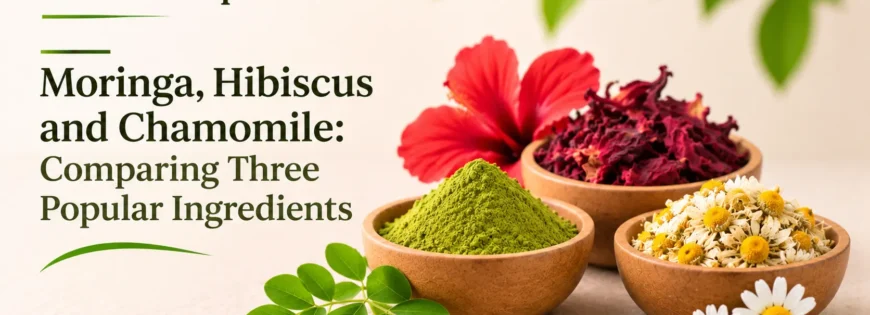
These ingredients are often grouped together as herbal teas, but they come from different plants and deliver noticeably different flavors. Moringa tea is generally made from leaves, hibiscus tea from dried calyces, and chamomile tea from flower heads. None comes from Camellia sinensis, the plant used to make green and black tea.
| Feature | Moringa tea | Hibiscus tea | Chamomile tea |
|---|---|---|---|
| Common plant part | Leaves | Calyces, the structures surrounding the flower | Flower heads |
| Typical flavor | Earthy, green and mildly grassy | Tart, fruity and cranberry-like | Mild, floral and sometimes apple-like |
| Typical appearance | Pale yellow-green to green-brown | Deep pink to ruby red | Pale gold |
| Naturally caffeine-free? | Yes, when made from moringa alone | Yes, when made from hibiscus alone | Yes, when made from chamomile alone |
| Popular serving style | Warm, sometimes with lemon or ginger | Hot or chilled, often sweetened to taste | Warm, plain or with a little honey |
Flavor and color vary with the ingredient’s freshness, quantity and brewing time. A blend can also taste quite different from a single-ingredient infusion. If avoiding caffeine matters to you, check the full label: a botanical blend may also contain green tea, black tea or another caffeine-containing ingredient.
Understanding the Three Ingredients
Moringa tea: leafy and earthy
Moringa tea is commonly prepared from the dried leaves of Moringa oleifera, a tree whose leaves and other parts have culinary and traditional uses in many regions. The infusion tends to have a green, earthy character that can seem grassy or slightly bitter when brewed strongly. It is a useful option for someone who prefers a less floral drink.
Dried moringa leaves and moringa powder are not quite the same thing in a cup. Leaves are usually steeped and strained, while fine powder may remain suspended or settle at the bottom. The nutritional content of moringa leaves does not mean that a strained infusion provides the same amounts of nutrients as eating the leaves, so it is best to enjoy the tea as a beverage rather than rely on it as a nutrient source.
Look for products that clearly identify the plant part as leaf. Moringa root, bark and concentrated extracts should not be assumed to have the same safety profile as leaf tea. For a closer look at the different forms, read about moringa leaves versus moringa powder.
Hibiscus tea: bright and tart
Hibiscus tea is commonly made from the dried calyces of Hibiscus sabdariffa, also known as roselle. The calyx is the fleshy structure surrounding the flower, although dried hibiscus for tea is often sold simply as “hibiscus flowers.” Not every ornamental hibiscus is suitable for brewing, so choose material identified and sold for food use.
The infusion is known for its deep red color and sharp, fruity taste. It can be served warm, but it also works well chilled with ice, mint or a little sweetener. Longer brewing or a larger quantity generally produces a stronger, more tart cup.
Hibiscus has a history of culinary use in drinks, including karkade. Some small human studies have examined its effect on blood pressure, but results do not establish it as a substitute for medical care or prescribed treatment. Its tartness can also be unpleasant for people who find acidic drinks irritating.
Chamomile tea: gentle and floral
Chamomile tea is made from dried flower heads, commonly German chamomile or Roman chamomile. It usually produces a pale golden infusion with a soft floral aroma and a flavor sometimes compared to apple or hay. Its relatively mild taste makes it a useful starting point for people new to flower teas.
Many people associate chamomile with a quiet evening routine. Research into chamomile and sleep has produced mixed results, however, and a cup of tea should not be presented as a guaranteed sleep aid. Its value as an enjoyable, caffeine-free drink can be considered separately from any hoped-for health effect.
Whole dried flower heads are easy to recognize and strain, while crushed chamomile may brew more quickly and leave finer particles. The species and preparation can affect the aroma, so check the label if you want to know exactly what you are buying. Our guide to chamomile tea, its uses and preparation offers more detail.
How to Prepare Each Herbal Tea
A good herbal tea comparison includes brewing, because steeping time and quantity can change the flavor considerably. The amounts below are starting points for approximately one 250 ml cup, not fixed rules. Use clean equipment, drinking-quality water and ingredients intended for consumption, and follow the package instructions when provided.
Moringa leaf tea
- Place about 1 teaspoon of dried moringa leaves in a cup or infuser.
- Pour freshly boiled water over the leaves.
- Cover and steep for about 5 minutes, then strain.
- Taste and adjust the next cup with more leaves or a slightly longer steep if desired.
If the tea tastes too grassy or bitter, try a shorter steep or use fewer leaves. A small slice of ginger or a squeeze of lemon can change the flavor without hiding it completely. Moringa powder behaves differently from loose leaves, so use the product’s directions rather than assuming it will strain cleanly.
Hibiscus tea
- Place about 1–2 teaspoons of dried, food-grade hibiscus in a cup or heatproof pot.
- Add 250 ml of freshly boiled water.
- Cover and steep for about 5–8 minutes, then strain.
- Drink warm, or let it cool and refrigerate before serving over ice.
Hibiscus can become quite tart, so start with a smaller amount if you prefer a gentler flavor. Add sugar, honey or another sweetener to taste if needed, keeping in mind that the amount added changes the drink. For more detailed instructions, see how to make hibiscus tea from dried flowers.
Chamomile tea
- Add about 1–2 teaspoons of dried chamomile flower heads to a cup or infuser.
- Pour over 250 ml of freshly boiled water.
- Cover and steep for about 5–7 minutes.
- Strain and enjoy plain, or add a little honey if you like.
Covering the cup helps retain some of the aroma while the flowers steep. If the flavor is too delicate, increase the amount of chamomile before extending the brewing time considerably. For any chilled herbal drink, cool it promptly, keep it refrigerated and enjoy it within a day.
Which Tea Should You Choose?
The best choice is the one whose flavor and preparation fit your preferences. If you like green, savory notes, start with moringa. If you enjoy tangy fruit drinks, hibiscus is likely to make the strongest impression, while chamomile suits those looking for a softer floral cup.
Consider these practical differences when deciding:
- For a less floral cup: Try moringa leaves, brewed briefly at first.
- For an iced drink: Hibiscus offers a bold flavor that remains noticeable after chilling and adding ice.
- For a mild infusion: Chamomile is usually gentler than tart hibiscus or strongly brewed moringa.
- For flexibility: Start with single ingredients so you can learn their flavors before trying blends.
- For caffeine avoidance: Choose an ingredient on its own and check blended products for tea leaves or other caffeine sources.
You can also combine these ingredients, but taste each one separately first. A little hibiscus can add color and tartness to chamomile, although too much may overwhelm its delicate aroma. Moringa and hibiscus make a more assertive leafy-and-tart combination; start with small quantities and adjust to taste.
Quality, Storage and Safety Considerations
Choosing and storing ingredients
When shopping for herbal tea in Pakistan, look for a clear ingredient list, the relevant plant part and a package that is properly sealed. For dried flowers and hibiscus calyces, choose products intended for food or beverage use rather than decorative arrangements, potpourri or garden material. Food-grade identification matters because decorative products may not be handled or treated for consumption.
Check whether a product contains only the named ingredient or a blend with added flavorings, sweeteners or tea leaves. “Natural” and “organic” are not interchangeable terms: an organic claim should be supported by applicable certification information, rather than assumed from the appearance of the packaging. Color and aroma can offer clues about condition, but they cannot by themselves prove purity or safety.
Store dried leaves and flowers in a clean, dry, airtight container away from heat, sunlight and moisture. Keep moringa powder tightly closed as well, since fine powders can readily pick up moisture and odors. Discard material that shows signs of mold, dampness, pests or an unusual smell, and follow any storage and best-before guidance on the package.
Who should be cautious?
Natural ingredients are not automatically suitable for everyone. Chamomile may cause allergic reactions, particularly in people sensitive to plants in the daisy family, such as ragweed. It may also interact with medicines, including warfarin and sedatives, so ask a healthcare professional before using it if you take these medicines.
Hibiscus may affect blood pressure, and people taking blood-pressure medication should seek medical advice before drinking it regularly. Evidence on the safety of these teas during pregnancy and breastfeeding is limited, so check with a qualified healthcare professional first. The same caution applies to children, people with medical conditions and anyone taking regular medication, especially when considering concentrated extracts rather than an occasional beverage.
Stop using an ingredient and seek medical advice if you experience a reaction. Do not replace prescribed treatment with herbal tea. If you are trying an unfamiliar ingredient, a small serving also makes it easier to notice whether its taste or effects suit you.
Frequently Asked Questions
Do moringa, hibiscus and chamomile teas contain caffeine?
The individual ingredients are naturally caffeine-free when brewed on their own. A ready-made blend may contain green tea, black tea or another caffeine-containing ingredient. Read the complete ingredient list if you need to avoid caffeine.
What do moringa, hibiscus and chamomile taste like?
Moringa is generally earthy and grassy, while hibiscus is tart and fruity. Chamomile is milder, with floral notes that some people describe as apple-like. Strength varies with freshness, quantity and steeping time.
Can I mix moringa, hibiscus and chamomile together?
Yes, food-grade versions can be combined according to taste. Begin with a small amount of each, as hibiscus can dominate a blend and make it quite tart. Combining ingredients does not remove their individual allergy or medication-interaction considerations.
Is it safe to drink these teas every day?
There is no single answer that applies to everyone or every product. Suitability depends on the ingredient, amount, blend, health conditions and medicines you take. If you are pregnant, breastfeeding, taking medication or unsure about regular use, ask a healthcare professional for individualized advice.
Is moringa powder the same as moringa leaf tea?
Moringa powder is made from ground material and may remain in the drink rather than being strained out. Loose-leaf tea is usually steeped and strained, leaving much of the plant material behind. Check the label to confirm the plant part and follow the preparation directions for that form.
How can I tell whether dried flowers are suitable for tea?
Choose flowers or calyces sold specifically for food or beverage use, with clear ingredient and handling information. Decorative dried flowers and ornamental garden flowers should not be assumed to be edible. If the product’s identity or intended use is unclear, do not brew it.
Conclusion
Moringa, hibiscus and chamomile offer three distinct ways to enjoy botanical tea: leafy and earthy, tart and colorful, or mild and floral. Start with a single ingredient, adjust the brewing time to your taste and check labels for plant parts, additional ingredients and food-use information. Keep personal sensitivities and medication interactions in mind rather than assuming that every natural tea suits everyone.
Seven Trees is a Pakistani natural wellness brand focused on teas, botanical ingredients and related natural products. To continue exploring, browse its herbal tea articles and natural ingredient guides, or visit SevenTrees.pk to explore current products and check availability.