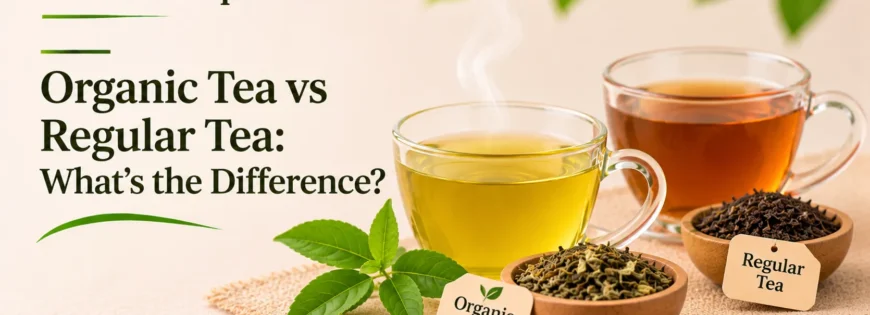
Organic Tea vs Regular Tea: What’s the Difference?
The main difference between organic tea and regular tea is how the ingredients are grown and handled under an applicable organic standard. Organic production restricts many synthetic pesticides and fertilisers, while conventional production follows a different set of farming rules. Neither label tells you everything about a tea’s taste, freshness, caffeine content or suitability for you.
For shoppers in Pakistan, the most useful approach is to look beyond the word “organic.” Check the ingredient list, any certification claim, the seller’s tea sourcing information and the packaging. This guide explains what those details mean and how to choose a tea that fits your preferences.
What Does Organic Tea Mean?
The organic tea meaning begins with the way tea plants or other botanical ingredients are cultivated. Organic farming generally relies on approved practices for soil management, pest control and production, while restricting many synthetic agricultural inputs. The exact requirements depend on the organic standard used.
A certified organic tea has been assessed against a specified standard by an authorised certification body. Certification can also cover aspects of processing, handling and record-keeping, depending on the product and standard. A credible label should make it possible to identify the relevant standard or certifier rather than relying on a vague claim alone.
Organic does not mean that a crop was grown without any pest-control substances. Some inputs may be permitted under a particular organic standard, and residues can sometimes occur through environmental contamination or other sources. Likewise, organic certification is not a guarantee that a product is free from every possible contaminant.
What Is Conventional Tea?
Conventional tea is grown and processed outside an organic certification system. Farmers may use agricultural inputs permitted under the rules that apply in their production location and target market. Practices vary considerably between farms, so “conventional” does not describe one uniform growing method.
Regular tea sold in shops is often conventional, although “regular” can also simply mean a familiar everyday tea. It may be loose leaf or packed in tea bags, and it can include black, green or other tea varieties. A conventional product can still provide useful information about its origin, ingredients and handling.
Organic Tea vs Conventional Tea: Key Differences
| Consideration | Organic tea | Conventional tea |
|---|---|---|
| Farming approach | Follows the requirements of an applicable organic standard when certified | Follows conventional agricultural practices and applicable regulations |
| Agricultural inputs | Many synthetic pesticides and fertilisers are restricted; some approved inputs may be used | Permitted inputs depend on applicable rules and the grower’s practices |
| Verification | A certified product is assessed under a recognised certification system | Organic certification is not required |
| Taste | Depends on the tea variety, growing conditions, processing and freshness | Depends on the same factors |
| Caffeine | Depends on the ingredients and brewing method, not organic status alone | Depends on the ingredients and brewing method |
| Price | May cost more, although prices vary | May be less expensive, although prices vary |
The table is a starting point rather than a quality ranking. A carefully sourced conventional tea can be enjoyable and well handled, while an organic label does not guarantee a fresh or flavourful cup. Compare products using both their production claims and the practical details on the package.
Does Organic Tea Taste Different?
Organic status alone cannot tell you what a tea will taste like. A tea’s variety, growing environment, harvest, processing and storage all influence its flavour and aroma. Brewing time and water temperature also make a noticeable difference in the cup.
If you want to compare two teas fairly, choose similar varieties and prepare them in the same way. For example, compare two plain green teas rather than a green tea with a floral blend. Look for differences in aroma, bitterness and aftertaste instead of assuming that one farming method produces a particular flavour.
True Tea and Organic Herbal Tea
Black, green, white and oolong teas come from the plant Camellia sinensis. Their different characteristics mainly result from how the leaves are processed. Each can be organic or conventional, depending on how it is produced and whether an organic claim is supported.
Herbal teas are different. They are infusions made from other plants, such as mint leaves, chamomile flowers or hibiscus, and may not contain Camellia sinensis at all. An organic herbal tea is therefore an herbal infusion whose ingredients meet the relevant organic requirements when the product is appropriately certified.
A blend can contain several ingredients, so its overall organic claim deserves particular attention. Check whether the packaging identifies a certified organic product or describes only certain ingredients as organic. For more on the distinction between tea leaves and botanical infusions, read about herbal tea without tea leaves.
What About Qehwa and Floral Teas?
Qehwa can refer to different preparations, and recipes vary by household and region. Some versions contain tea leaves, while others use herbs, spices or flowers without them. The ingredient list is the best guide to what is actually in a packaged blend.
Floral teas may contain food-grade dried flowers on their own or alongside tea leaves and other botanicals. For example, a rose infusion and a rose-flavoured black tea are not necessarily the same product. Organic status is separate from whether a flower is suitable for consumption: choose flowers intended for food use, not decorative flowers.
Is Organic Tea Healthier or Safer?
Organic certification describes production practices; it does not prove that a particular tea is healthier than a comparable conventional tea. Tea contains naturally occurring compounds, but their amounts vary with the plant, processing and preparation. An organic label alone cannot establish a reliable nutritional or health advantage for every product.
Both organic and conventional teas need appropriate handling, storage and quality controls. Consumers cannot determine whether a tea meets contaminant limits simply by looking at the leaves or smelling them. Clear sourcing information, trustworthy sellers and relevant testing information, when available, can help support a purchasing decision, but no single label guarantees safety.
Your choice of ingredients also matters. Tea made from Camellia sinensis naturally contains caffeine, whether it is organic or conventional. Many herbal infusions are naturally caffeine-free, but blends can contain tea leaves or other caffeine-containing ingredients, so check the full label if you are sensitive to caffeine.
Natural ingredients are not automatically suitable for everyone. People with allergies, those who are pregnant or breastfeeding, and anyone taking medication or managing a medical condition should check whether a particular herb is appropriate for them. A qualified healthcare professional can offer advice based on the individual and the ingredients involved.
How to Evaluate Tea Sourcing and Labels in Pakistan
When shopping for organic products in Pakistan, start with information you can verify rather than an appealing product description. A useful label identifies what is in the package and provides enough detail to investigate important claims. This is especially helpful when buying a blend online and you cannot inspect it before purchase.
Check the Organic Claim
Look for the name of the organic standard or certification programme and the certification body, where applicable. If a certification logo appears, check whether it relates to the product or operator and whether you can verify the claim through the certifier’s available records. Imported products may refer to standards from their destination or certification market, so the meaning of a logo depends on the programme.
Be cautious if a seller uses “organic” prominently but provides no information about the basis for the claim. You can ask whether the product is certified and request details of the relevant certificate or certifier. For a closer look at what to examine, see this guide to organic tea certification labels.
Read the Ingredients and Origin
The ingredient list tells you more about your cup than the front of the package alone. A product described as natural, floral or traditional may still contain flavourings or a mixture of botanicals. Those additions are not automatically a problem, but they should match what you want to drink.
Consider these points when comparing options:
- Ingredients: Check the complete list, especially if you avoid particular herbs, flavours or caffeine.
- Origin: Look for available information about where the tea or botanicals were grown or sourced.
- Organic status: Check whether the claim applies to the whole product or only specified ingredients.
- Food suitability: Choose flowers and herbs intended for consumption.
- Packaging: Look for a sealed package that protects dried ingredients from moisture and light.
- Dates and storage: Check the best-before date and any handling instructions.
- Seller information: Look for contact details and clear answers to questions about sourcing or certification.
“Natural” and “organic” are not interchangeable terms. A natural ingredient may be minimally processed or plant-derived, but the word does not establish that it was produced under an organic standard. Similarly, a description such as “chemical-free” is not a meaningful guarantee: all foods and plants contain naturally occurring chemical compounds.
If you are ordering herbal tea in Pakistan, review the listing as carefully as you would the physical label. Ask the seller for missing ingredient or certification information before ordering. The guide to reading herbal tea labels explains more details worth checking.
How to Brew and Store Your Tea
Organic and conventional teas do not need different brewing methods simply because of their production status. Instead, follow the instructions for the type of leaf, flower or blend you have chosen. A delicate green tea, for example, may become bitter if brewed too hot or too long, while a dried herbal blend may need a different steeping time.
For a straightforward cup, use this method:
- Check the label. Follow the producer’s instructions for the amount, water temperature and steeping time when provided.
- Use clean drinking water and equipment. Rinse your cup, teapot or infuser before use.
- Add the tea or botanicals. Start with the suggested amount; you can adjust it in later cups.
- Pour and steep. Use the recommended water temperature and cover the vessel if appropriate.
- Strain and taste. If the flavour is too strong or weak, adjust the quantity or steeping time next time.
For loose leaves, an infuser gives the ingredients room to steep and makes straining easier. Milk, lemon or a sweetener can be added according to the tea and your preference, but taste it plain first if you want to judge its character. Avoid assuming that a longer steep always produces a better cup; it can also draw out flavours you may find unpleasant.
Store dried tea in a clean, airtight container away from heat, light, moisture and strong odours. In humid conditions, close the package promptly after each use and avoid handling the contents with a wet spoon. If the tea shows signs of mould, unusual moisture or an off smell, discard it rather than trying to restore it.
Choosing the Right Tea for Your Cup
Organic tea may appeal to shoppers who prefer ingredients produced under an organic standard, while conventional tea can be a practical choice when it meets their needs for flavour, information and budget. The strongest comparison considers the whole product: its ingredients, sourcing, freshness, packaging and any verifiable certification. Neither “organic” nor “natural” should replace a careful label check.
Seven Trees is a Pakistani natural wellness brand focused on teas, botanical ingredients and other natural products. If you are exploring different ingredients before choosing a blend, the herbal teas category offers related reading. Check individual product information for current availability and any specific sourcing or certification claims.
Frequently Asked Questions
Is organic tea completely pesticide-free?
Not necessarily. Organic standards restrict many synthetic pesticides, but they can permit certain pest-control inputs. Residues may also occur through environmental exposure or other sources, so certification should not be treated as a guarantee of zero residues.
Is organic tea better than regular tea?
“Better” depends on what matters to you. Organic certification may be important if you prefer a specified production approach, while taste, freshness, price and ingredient transparency also matter. An organic label alone does not establish that a tea is healthier or tastier.
Does organic tea contain caffeine?
Organic tea made from Camellia sinensis, including black and green tea, naturally contains caffeine. Organic status does not remove it. Many herbal infusions are naturally caffeine-free, but check blends for tea leaves or other caffeine-containing ingredients.
Is organic herbal tea the same as natural herbal tea?
No. “Organic” refers to a production claim connected to an applicable standard, while “natural” does not by itself confirm organic production or certification. Read the ingredients and look for details supporting any certification claim.
Can I tell whether tea is organic by looking at it?
No, appearance cannot reliably establish how tea was grown. Organic and conventional leaves or flowers may look and smell similar. To evaluate an organic claim, check the label and seek information about the applicable standard and certifier.
How should I choose organic tea online in Pakistan?
Start with a clear ingredient list, packaging details and information about the seller. If the product claims to be certified organic, look for the standard or certifier and ask for clarification when details are missing. Choose a tea variety and caffeine level that suit your preferences rather than relying on the organic claim alone.